
iron mill scale recycling product fabricante Agarrando fuerte capacidad de producción, fuerza de investigación avanzada y excelente servicio, Shanghai iron mill scale recycling product proveedor crea el valor y aporta valores a todos los clientes.
 WhatsApp)WhatsApp)
The cement plants looked for other sources of the iron and mill scale became a personna non-grata. As the international market place for mill scale was taking off with China purchasing it as previously indicated, it is now an out to send the hazardous waste there and let them deal with it.

The mill scale is produced during the milling process from the sudden oxidization of the hot iron products. The main component of the mill scale is iron oxide (>95%) The mill scale can be used as: 1. Additive in the production of ceramic tiles and roofing 2. Additive in the cement industry 3. Catalyst in the recycling of batteries 4.
Mill scale is very attractive industrial waste due to its richness in iron (about = 72% Fe). In this paper, the characterizations of mill scale were studied by different methods of analyses. The produced mill scale briquettes were reduced with hydrogen at varying temperatures, and the reduction kinetics was determined. Two models were applied and the energy of activation was calculated.
Nov 28, 2015· Clinker is an intermediate product in the process or making a final cement product. Portland cement can be manufactured using three byproducts from the iron and steel industries. These three byproducts are mill scale, foundry sand, and slag. Foundry sand can provide silica and iron which are used in the production of clinker.
Mill scale is a very at- tractive industrial waste due to its richness in iron [about = 72 % Fe) [2]. In the whole world, 13.5 million tons of mill scales are generated annually [3]. Mill scale is suitable for direct recycling to the blast furnace via sintering plant [4]. Ap- proximately, 90% of mill scale .
Iron Mill Scale. 237 likes. Product/Service. Facebook is showing information to help you better understand the purpose of a Page.
Nowadays, most steel mills can supply their product with mill scale removed and steel coated with shop primers over which welding or painting can be done safely. Mill scale generated in rolling mills will be collected and sent to a sinter plant for recycling.
Mill scale, often shortened to just scale, is the flaky surface of hot rolled steel, consisting of the mixed iron oxides iron(II) oxide (FeO), iron(III) oxide (Fe 2 O 3), and iron(II,III) oxide (Fe 3 O 4, magnetite).. Mill scale is formed on the outer surfaces of plates, sheets or profiles when they are being produced by rolling red hot iron or steel billets in rolling mills.
Mill scale is formed on the outer surfaces of plates, sheets or profiles when they are being produced by rolling hot iron or steel billets in rolling or steel mills. It looks like a hard brittle sand and is mainly composed of iron oxides, mostly ferric, and is bluish black in color.
3 Iron Unit Recycling On a weight basis, steel is the most recycled material in use today (Figure 3-1). The 70 million net tons of steel recycled in 2000 were used to produce about 112 million net tons of new steel in the United States.
Mill scale is a flaky surface that can be found on iron oxides and metals that have been hot rolled. Mill scale forms on exterior surfaces of sheets and plates as they are being manufactured through rolling steel billets and hot iron into rolling mills. Mill scale typically consists of iron oxides that are bluish black.
Nov 19, 2018· Mill scale consists of oxides of iron, above all, but also the metal alloys that are included in the steel of which the mill scale is formed. Chemically, the mill scale can be compared with iron ore and can frequently be used in similar applications, e.g. as a raw material on production of pig iron, ferrous alloys and cement.
AbstractMill scale is an iron oxide waste generated during steelmaking, casting and rolling. Total generation of mill scale at JSWSL is around 150 t/day and contains 60–70%FeO and 30–35%Fe2O3. To recover the iron, the mill scale must be smelted in a blast furnace or other reduction furnace; however, it is usually too fine to use without previous agglomeration such as via pellet or sinter mix.
Mill scale can also be used in the manufacture of water-treatment chemicals that are used in agricultural, forestry, fishing, and scientific activities related to research and development. Foundry Iron. Mill scale is used as a source of iron for manufacture of iron and steel from scrap materials.
Production of sponge iron powder by reduction of rolling mill scale M. I. Martı ´n*1,2,F.A.Lopez3 and J. M. Torralba4 Rolling mill scale is a solid byproduct of the steelmaking industry that ...
May 25, 2017· These methods remove the mill scale and provide a surface profile that gives the coating system its design requirements. Coating over mill scale, however tempting, is a futile exercise, as the presence of mill scale on the steel surface accelerates the corrosion of the underlying steel. Uses and recycling of mill scale
Oct 17, 2013· Abstract. Oily cold rolling mill (CRM) sludge contains lots of iron and alloying elements along with plenty of hazardous organic components, which makes it as an attractive secondary source and an environmental contaminant at the same time.
In the semi-integrated process, the main ones are the slag of electric steelmaking, EAF dust and mill scale continuous casting and rolling. 1.2. Electric arc furnace (EAF) dust. The EAF dust is generated during melting of scrap in electric arc furnace and collected by bag filters or electrostatic precipitators.
Mill scale named for the oxide that is a result of steel/iron production. Mill scale the flaky surface of hot steel and iron oxide consisting of iron. Mill scale used in place of other materials to help reduce their pollution footprint and therefore partially avoid using iron ore or magnetite in their processes.
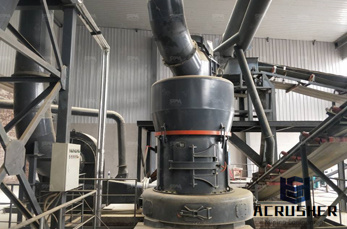
Mill Scale Products - Accrue Group Holdings. Mill Scale Products are available subject to availability and Spec Requirements.... Mill scale, often shortened to just scale, is the flaky surface of hot rolled steel, iron oxides consisting of iron (II,III) oxide, hematite, and magnetite.
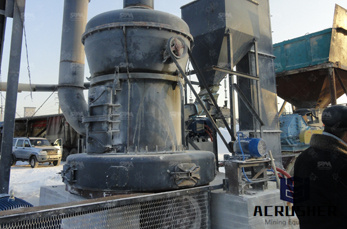
Sep 23, 2014· In the rolled product coming out of the rolling mill,,mill scale is usually less than 1 mm thick and initially adheres to the steel surface and protects it from atmospheric corrosion provided no break occurs in this coating. If mill scale is a uniformly well adhered covering to the steel section, then it would make an ideal protective barrier.
While Mill Scale is deliberately formed in steel mills, it is treated as a waste product once it has been flaked off. Recycling this product has become possible due to changes in iron production methods as it can be mixed with other iron sources in smelters as well as with lower grade ores prior to shipping.
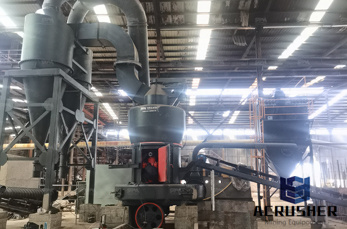
Feb 22, 2017· Mill scale is a flaky surface that forms on the exteriors of steel sheets and plates during their manufacture via rolling billets and hot iron. The by-product is comprised of bluish-black iron ...
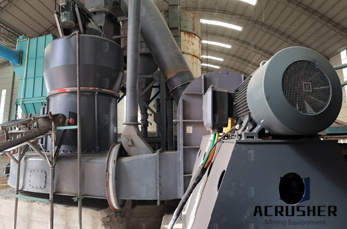
Jun 11, 2019· Iron Powder Production from Mill Scale Scrap. Iron Powder Production from Mill Scale Scrap. Powdered Iron Metal Manufacturing Business. Iron powder is powdered iron metal. Iron powder is used in manufacturing of sintered components, soft magnetic components, brazing, iron fortification, friction products, , surface coating, welding ...

 Chat en línea
 Línea directa de ventas